
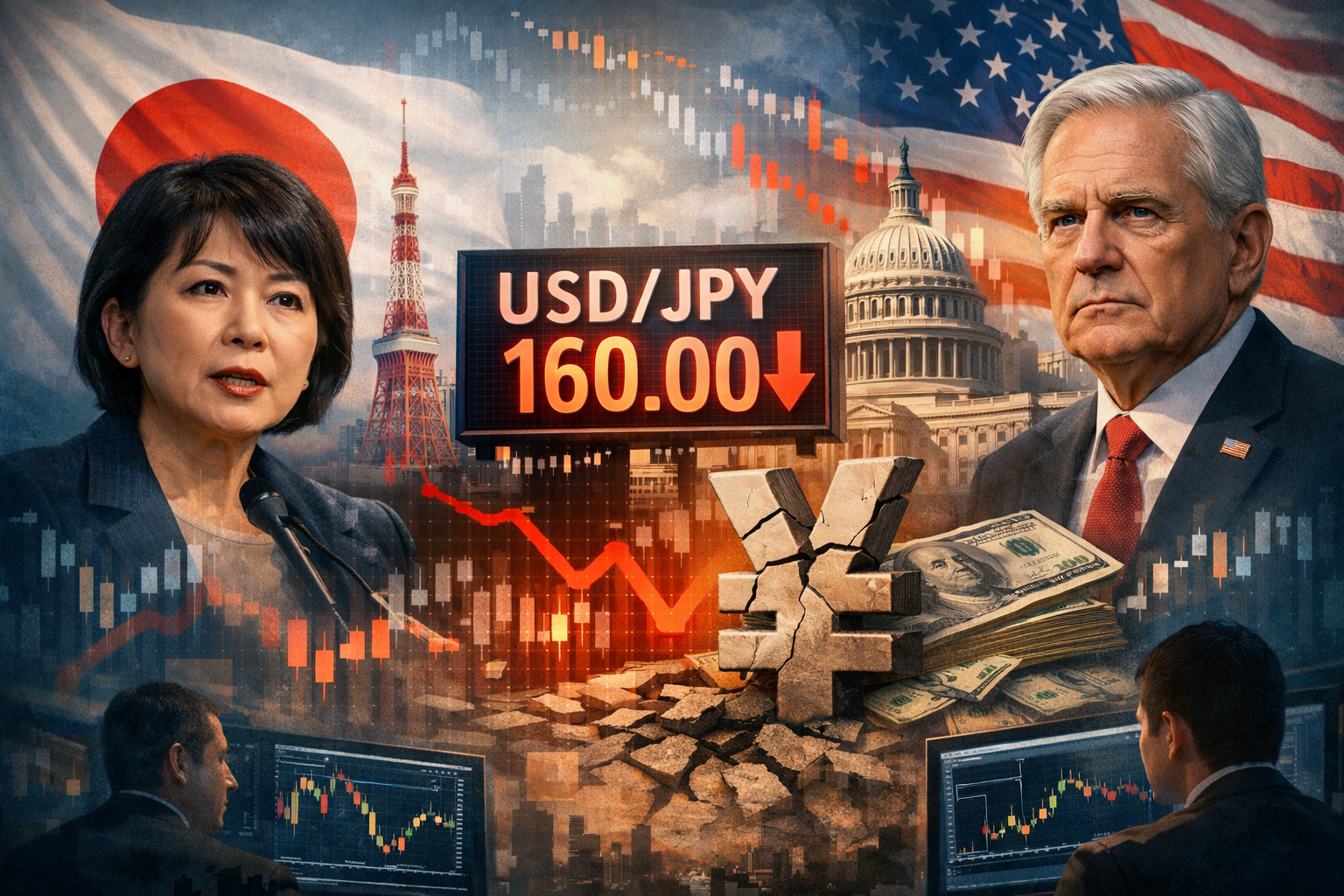
TOKYO, January 27, 2026 – Japan has issued its strongest warning yet to currency markets, stating it stands ready to take “appropriate steps” to support the yen in close coordination with the United States Treasury. The coordinated alert comes after the Japanese currency briefly touched the critical psychological level of 160 yen per U.S. dollar, triggering what markets interpret as direct preparatory moves for potential joint intervention.
Finance Minister Satsuki Katayama explicitly stated that Japan would act “in line with the Japan-U.S. FX agreement” reached last September, reinforcing a unified front with Washington that marks a significant shift in global currency policy management. The warnings follow similar comments from Japan’s top currency diplomat, Vice Finance Minister Atsushi Mimura, creating a chorus of official concern that has already sparked the yen’s strongest rally in nearly six months.
The Yen’s Steep Decline: A Perfect Storm
The Japanese currency has lost approximately 12% of its value against the dollar over the past six months, caught in a widening policy divergence between the Bank of Japan’s near-zero interest rates and the U.S. Federal Reserve’s restrictive monetary stance.
This interest rate gap has fueled what analysts describe as a “one-way bet” for currency traders, who have been aggressively selling yen to buy higher-yielding dollars. The sustained weakness now threatens to:
- Significantly increase costs for energy and food imports
- Exacerbate domestic inflation already above the central bank’s target
- Undermine household purchasing power
- Create unsustainable competitive advantages for Japanese exports
Anatomy of a Coordinated Response
The path to the current currency alert began on Thursday, January 24, with a technical but highly symbolic move: the Federal Reserve Bank of New York contacted primary dealer banks to check dollar/yen rates—a standard procedure but one widely viewed as the clearest precursor to potential market intervention.
The sequence of events reveals unprecedented coordination:
| Date | Key Event | Market Impact |
|---|---|---|
| Jan 24 | USD/JPY touches 160.00 | Level seen as critical intervention trigger |
| Jan 24 | NY Fed conducts “rate checks” | Signal interpreted as direct intervention prep |
| Jan 26 | Vice Minister Mimura pledges coordinated action | Reinforces bilateral framework |
| Jan 26 | Minister Katayama references Sept 2025 agreement | Confirms official policy stance |
The repeated reference to the September 2025 agreement is particularly significant. While the full details remain confidential, financial diplomats confirm it established a formal framework for currency cooperation, moving beyond the ad-hoc consultations that characterized past episodes of yen weakness.
Market Reaction: A Sharp but Fragile Rebound
The warnings produced immediate effects across global currency markets:
- The yen surged by approximately 4% against the dollar—its largest single-day gain since August 2025
- The USD/JPY pair fell rapidly from near 160 to around 154
- Hedge funds and speculative traders began rapidly unwinding short-yen positions
“The threat of joint Japan-U.S. intervention carries substantially more credibility than previous unilateral efforts,” noted Robert Ford, currency analyst at Goldman Sachs. “In both 2022 and 2024, Japan acted essentially alone. Today we have explicit coordination, making the deterrent effect considerably more potent.”
Domestic Political Crosscurrents
The currency defense comes at a sensitive political moment for Japan’s government, which faces a snap election on February 8. Yen weakness has emerged as a central campaign issue, with opposition parties accusing the government of failing to protect household finances from imported inflation.
Across the Pacific, the U.S. administration appears to have moderated its traditional “strong dollar” rhetoric, acknowledging that excessive yen weakness could destabilize global financial markets already grappling with heightened volatility. This shift suggests Washington views currency stability as increasingly aligned with its broader economic interests.
What Comes Next: Verbal Intervention or Market Action?
Analysts remain divided on whether the coordinated warnings will be followed by physical intervention in currency markets:
Most Likely Scenario (60% probability): Verbal warnings continue to support the yen without direct intervention, at least until key central bank meetings in early February.
Intermediate Scenario (30% probability): Limited, symbolic intervention if the yen approaches its recent lows again, primarily to establish the credibility of future threats.
Least Likely Scenario (10% probability): Sustained, large-scale intervention in response to renewed speculative pressure against the yen.
The next major test will be the Federal Reserve’s policy decision on February 4, where the potential announcement of a new—and possibly more dovish—Fed Chair could reshape interest rate expectations that have driven dollar strength.
Global Implications: Beyond the Pacific
The yen crisis carries implications far beyond Japan’s shores:
- A significantly stronger yen could recalibrate competitive dynamics across Asian export economies
- The demonstrated U.S.-Japan coordination may influence European Central Bank deliberations on euro stability
- Currency market volatility may drive capital flows toward perceived safe-haven assets, including sovereign debt of European nations with strong fundamentals
As currency markets hold their breath awaiting the next move, one conclusion appears clear: the era of unilateral currency interventions may be giving way to a new paradigm of strategic coordination among the world’s major economies.
Financial journalist covering currency markets and central bank policy
