
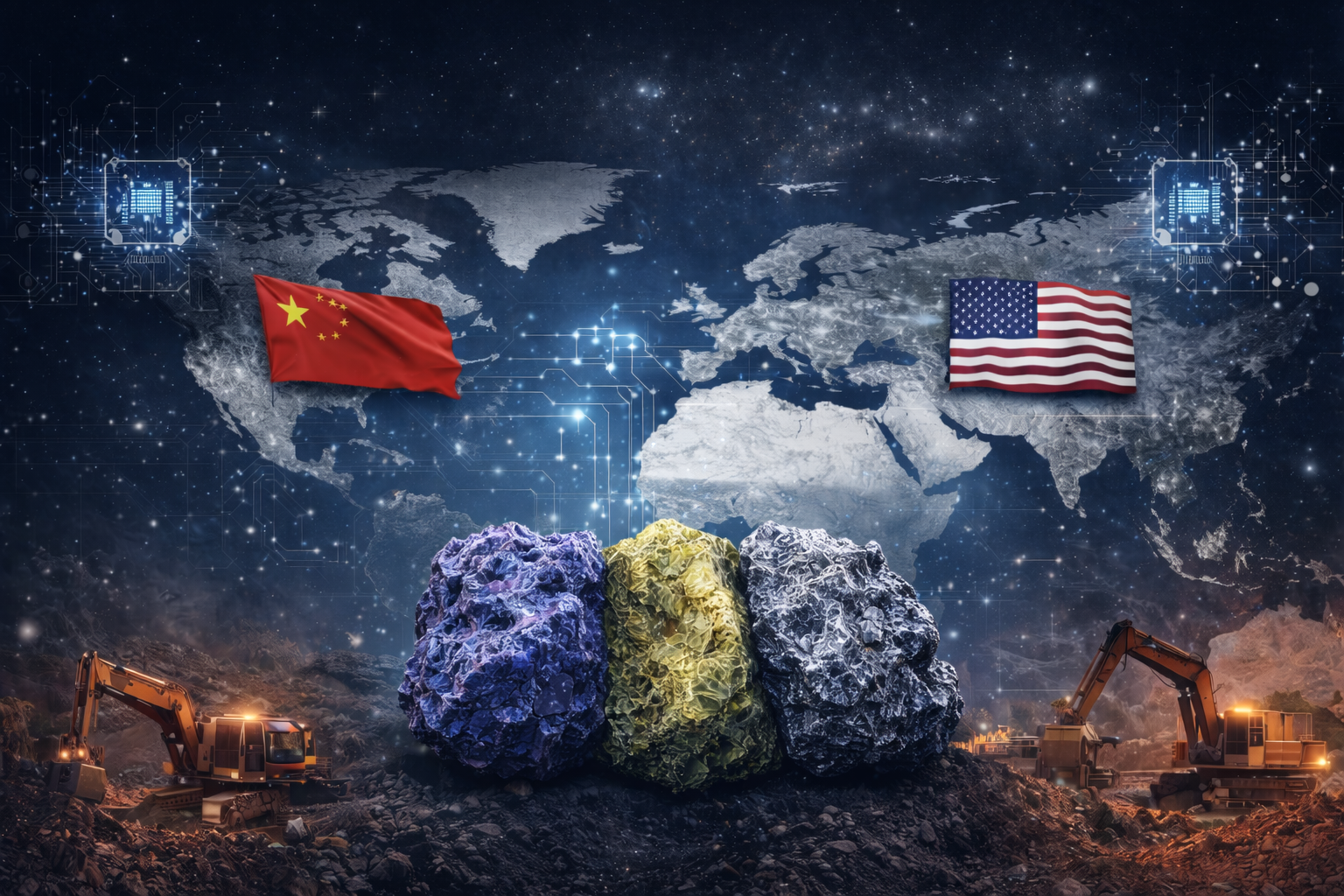
The race for Artificial Intelligence supremacy is no longer confined to Silicon Valley’s labs and algorithms. It is increasingly being fought deep underground and across remote landscapes, in a scramble for the critical minerals that power the AI revolution. This competition is redrawing geopolitical alliances, creating new investment frontiers, and exposing profound vulnerabilities in the global tech supply chain.
The “Minerals of the Future”: More Than Just Silicon
AI’s physical backbone—from gargantuan data centers to advanced semiconductors—depends on a handful of key elements:
- Lithium, Cobalt, Nickel, Graphite: Essential for the powerful batteries that back up data centers and enable the mobile infrastructure supporting AI.
- Rare Earth Elements (like Neodymium, Dysprosium, Praseodymium): Crucial for the permanent magnets in electric vehicle motors, wind turbines, and hard disk drives—all part of the broader ecosystem needed to build and power AI infrastructure.
- High-Purity Silicon: The foundation of all semiconductors.
- Copper: The “metal of electrification,” vital for wiring data centers and power grids.
Without secure and resilient access to these resources, leadership in AI is impossible. This reality is shifting investor focus upstream, from pure-play software firms to the complex and often opaque supply chains that extract and process these materials.
Investing in the “Ground Floor” of AI: A High-Stakes Game
Capital is flowing into this thematic opportunity through several channels:
- Specialized ETFs and Thematic Funds: Financial vehicles targeting companies involved in the mining, processing, and recycling of critical minerals are proliferating.
- Equities in Mining & Processing: Companies with exposure to key deposits—lithium in the “Lithium Triangle” (Chile, Argentina, Bolivia), cobalt in the Democratic Republic of Congo (DRC), rare earths in Australia and the USA—are under intense scrutiny.
- Commodity Futures: Trading in minerals like lithium and cobalt has become a direct bet on future technological demand.
Yet, this sector is fraught with unique risks: extreme price volatility, significant environmental and social governance (ESG) challenges (linked to pollution, water use, and labor practices), and acute geopolitical instability that can disrupt supply overnight.
The Geopolitical Chessboard: A Fragmented Supply Chain
The quest for AI minerals has ignited a strategic contest among global powers, making resource security a cornerstone of national strategy:
- China: The Refining Superpower. Beijing holds a dominant, often monopolistic position, refining over 80% of the world’s rare earths and controlling a large share of other critical mineral processing. It has demonstrated its willingness to use this leverage as a diplomatic tool. This dominance allows China to fuel its own tech industry while creating a strategic dependency for others.
- The West’s “De-risking” Crusade. Alarmed by over-reliance, the U.S. and EU are aggressively seeking to diversify and “friend-shore” their supply chains. Legislation like the U.S. Inflation Reduction Act and CHIPS Act includes billions to subsidize domestic mining and processing, and to forge partnerships with allies like Canada and Australia. The EU has its own Critical Raw Materials Act, aiming to boost intra-European extraction and secure external trade deals.
- The New “Resource Kingdoms”: Nations like the DRC (cobalt), Chile (lithium), Indonesia (nickel), and South Africa (PGMs) find their geopolitical significance dramatically elevated. They are now arenas of great power competition, courted with investment packages and infrastructure deals in exchange for resource access and favorable trade terms.
- The National Security Imperative: Advanced AI is a dual-use technology at the heart of modern defense systems. Consequently, securing its mineral inputs is now a core national security issue, leading to strategic stockpiles, export controls, and heightened military interest in resource-rich regions.
The Road Ahead: Conflict, Cartels, and Circularity
The path to AI sovereignty is paved with mineral supply chains. Future trends will likely include:
- Increased volatility and potential conflict in resource-rich but unstable regions, with rising resource nationalism.
- The emergence of “minerals-for-tech” alliances, where resource access is bartered for technology transfer or AI collaboration.
- A major push into recycling and “urban mining” to create a circular economy for critical minerals, reducing primary extraction dependency.
- The potential for new OPEC-style cartels for critical minerals, granting producer nations immense market power.
Conclusion: A Layered Investment Thesis
Investing in AI through critical minerals is a bet on a sector that is fundamental yet fiendishly complex. Success requires analyzing not just company balance sheets and ore grades, but also diplomatic maneuvers, industrial policy shifts, and the stability of distant governments.
The “new gold” of the AI age has unearthed the battle lines of a quiet techno-cool war. Control over the physical building blocks of intelligence will confer decisive power to shape the digital century. The ultimate winners in the AI race may well be determined not only by the brilliance of their code but by the depth of their strategic foresight—and their access to the earth’s hidden treasures. The game is now played on a board that stretches from cloud servers to cobalt mines, making every investor also an unwitting student of geopolitics.
